Benefits of Qigong on our respiratory system

Our respiratory system is responsible for supplying our bodies with oxygen and removing carbon dioxide, without it, none of our other body systems could function effectively.
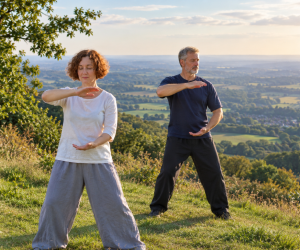
Qigong places considerable emphasis on breathing, posture and gentle movement, to support respiratory health. While teaching Qigong I focus heavily on two key areas, firstly building lung capacity and secondly improving oxygen absorption. I encourage my students to develop an awareness of their breathing.
When we consider health we think of energy in the form of solids, food, liquids, water but rarely consider the third form of energy, air. We often breathe without thinking about it, but learning to breathe more slowly and efficiently makes a real difference to how we feel.
Improving breathing efficiency
In Qigong, we practise slow, controlled breathing. The objective isn’t to force air into the lungs but to allow the breath to become deeper, more natural and coordinated with our movements. We learn to relax our breathing rather than strain. Our aim is to develop better breathing control.
Strengthening respiratory muscles
The diaphragm and muscles between the ribs play an important role in breathing. Qigong movements, combined with controlled breathing, help us practise using these muscles in a coordinated way.
Encouraging fuller breathing
Many Qigong exercises involve opening the chest, relaxing the shoulders and gently stretching the torso. Combined with relaxed breathing, these movements encourage greater freedom around the rib cage. As we develop our practice, we become more aware of how the breath moves through the body, particularly the expansion of the abdomen and lower ribs. This helps us develop a more complete awareness of our breathing. Later we learn to breathe from different parts of our lungs to focus absorption and massage organs.
Supporting oxygen exchange
Our lungs take oxygen into the bloodstream and remove carbon dioxide. Although Qigong doesn’t replace the body’s normal respiratory processes, controlled breathing and regular gentle exercise can help improve breathing control and physical conditioning.
Reducing stress and tension
This is perhaps one of the most important benefits. Stress can affect how we breathe, often resulting in shallow, rapid breathing. Qigong combines movement, breathing and mental focus to encourage relaxation and calmer breathing patterns.
There have been studies that found traditional qigong type exercises can improve certain measures of lung function, exercise capacity and quality of life. This suggests that Qigong can be a useful complementary activity for respiratory rehabilitation, alongside appropriate medical care.
One of the simplest things we can do to improve overall health and build our immune system is learning to breathe properly. Qigong gives us the opportunity to combine movement, stretching and breathing in a gentle, controlled way.