Acupressure points for the eyes
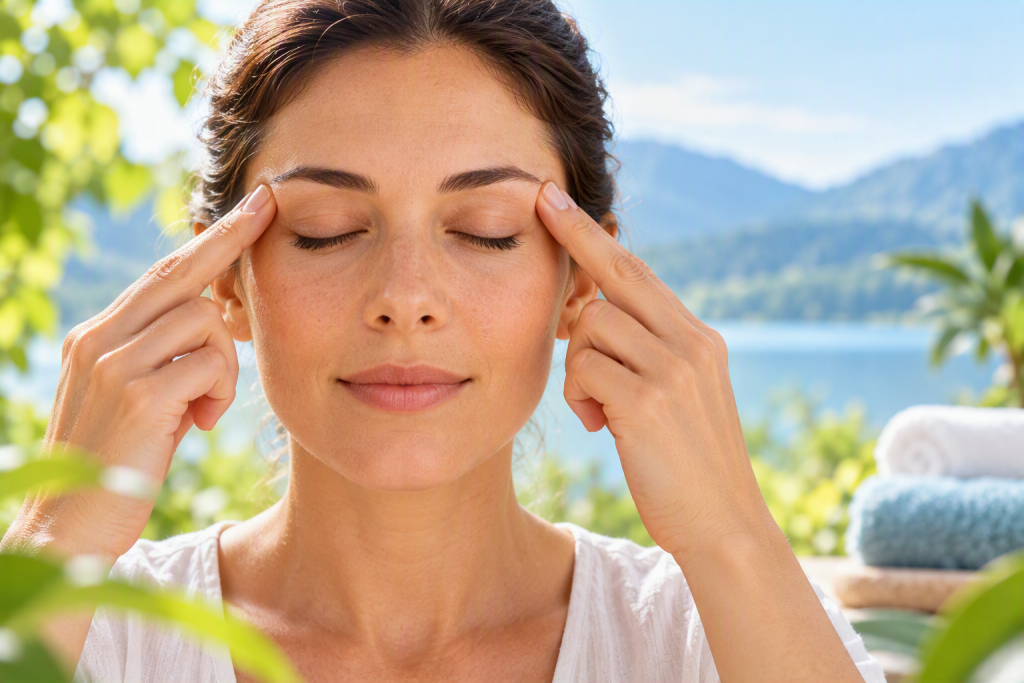
These are the points I regularly use on my eyes, they are part of my regular eye care routine. Over the years I have found them very beneficial. These come from my training in Yoga and Qigong and I find them useful for easing tension and relaxing the eyes. They have been used in Asian medicine for hundreds of years
Massage the acupressure points around the eyes
These will feel like small indentations on the edges of the skull the direction of pressure should be in at a 45 degree angle. You can either, press these points by applying light direct pressure to the points for a few seconds (3 to 30) using the pads of your fingers, massage the points using a circular direction or lightly tap the points. Avoid pressing directly on the eyeball, these points are on the edge of the bones around the eye socket.
There are four points to do this to;
- Mid way along the upper ridge of the eye socket
- Mid way along the lower ridge of the eye socket
- Inner corner of the eye socket
- Outer corner of the eye socket
These points will activate the tear ducts and are helpful if you get dry eyes.
- There is also a fifth point either side of the bridge of the nose at the inner ends of the eyebrows. Pinch the fifth pressure point on both sides and pull down the edge of the nose where it meets the face. Hold for a few seconds or make small circles.
- A nice facial massage you can do is to run your fingers around the edge of the eye socket, start by moving slowly along the brow and then down along the lower orbital bone using light pressure. Do the movement one way and then repeat in the other direction, repeat 5 times.
Although not technically for the eyes, the other point I use are;
- If you press lightly between the eyebrows you will find a slight indentation. Apply gentle pressure on this point, or make small circles for 20–30 seconds. This is a great point when relaxing the forehead.
- Next find the top of the ear and slightly forward (2 finger widths), if you press lightly you will find a soft hollow on the temple. Use the pads of two fingers to make small, gentle circles for 20–30 seconds. This feels soothing when your temples or forehead feel tense. Avoid forceful pressure.
Remember that these exercises will help you feel better but acupressure is not a substitute for modern medicine. A few minutes of gentle massage, relaxed breathing and a break from screens will help you feel better.
These are the points I find helpful and enjoy using, Traditional Chinese Medicine (TCM) has many more. 💚